
How to Source IEC Cable for LNG Projects
in 2026
Quick answer: Sourcing IEC cable for an LNG project starts with confirming which code actually governs your site. Many Gulf Coast LNG jobs are engineered to IEC hazardous area zones by an international EPC but legally sit under NEC Class and Division rules, and that mismatch is where most spec errors start. From there, you need to match cable construction to the real exposure (cryogenic boil-off, marine atmosphere, mechanical damage), confirm which components actually require Ex certification (usually the glands and enclosures, not the cable itself), and lock in supply terms before copper pricing and new import documentation requirements affect your delivery date. A distributor that will read the engineering spec with you before you commit to a purchase order, which is the whole premise behind EUTEX's EUNITE program, removes most of that risk up front.
If you're an engineering or procurement lead sourcing cable for an LNG facility, whether it's a liquefaction train, a marine terminal, or a peaking facility, this guide walks through where specifications go wrong, what compliance actually requires, how to plan around the supply chain conditions in 2026, and how to evaluate a vendor before you commit budget to it.
Why Sourcing Cable for LNG Projects Is Different From a Standard Industrial Job
LNG facilities combine three things that don't show up together on most industrial sites: explosive atmosphere classification, cryogenic process temperatures, and a marine or coastal environment. A cable running near a liquefaction train or storage tank has to survive gas group exposure, potential contact with boil-off vapor at extremely low temperatures, salt air, and UV, all while remaining part of a certified, documented, auditable electrical system.
That combination raises the cost of getting it wrong. A cable that's rated for a general Class I Division 2 environment but wasn't verified against the cryogenic exposure at a specific tank farm can fail in ways that are expensive to catch after installation: embrittlement, cracked jacketing, and a compliance file that won't hold up in an audit or an insurance review. Rework at that stage means pulled cable, delayed commissioning, and change orders that were entirely avoidable at the spec stage.
The Core Specification Gap: IEC Zones vs. NEC Class and Division
This is the single most common breakdown point on LNG projects, particularly along the U.S. Gulf Coast, where international EPCs and equipment vendors often design to IEC hazardous area standards while the facility itself is inspected and permitted under NEC rules.
IEC 60079-14, now in its sixth edition (published 2024), governs the design, selection, and installation of electrical equipment in explosive atmospheres under the Zone system (Zone 0, 1, 2 for gas; Zone 20, 21, 22 for dust). The U.S. National Electrical Code uses a different framework entirely: Class I, Division 1 or 2, with Groups A through D defining the gas classification.
| IEC (Zone System) | NEC (Class/Division System) | |
|---|---|---|
| Continuous hazard | Zone 0 | Class I, Division 1 (roughly) |
| Intermittent hazard | Zone 1 | Class I, Division 1 |
| Abnormal/unlikely hazard | Zone 2 | Class I, Division 2 |
| Gas grouping | IIA, IIB, IIC | Groups A, B, C, D |
These systems don't map one-to-one, and a spec written by an EPC using IEC conventions has to be translated correctly before it goes out for bid on a site that inspects to NEC. Getting this translation wrong is how projects end up with cable on order that's correctly rated on paper and wrong for the site.
There's a second, quieter misunderstanding that costs procurement teams real time: under IEC and ATEX conventions, the cable itself typically does not require Ex certification. Certification applies to equipment that could serve as an ignition source, which is the glands, junction boxes, and enclosures, not the cable jacket. Cable still has to meet performance requirements (flame propagation, gas migration resistance, mechanical protection), but requesting an ATEX or IECEx certificate for a length of cable is a common RFQ mistake that adds days to a quote for no compliance benefit. Knowing where certification actually applies, and where it doesn't, is one of the fastest ways to shorten a sourcing cycle.
Compliance Standards Worth Tracking Before You Issue an RFQ
For engineering and procurement teams building or updating a cable spec for an LNG project, these are the standards that most often determine whether a quote is even usable:
- IEC 60079-14:2024 – Installation design, selection, and erection for hazardous areas. The current edition moved from a largely prescriptive, component-based approach to a system-based, application-dependent one, particularly for flameproof (Ex d) cable entry. That means more documentation and technical justification is expected than in older editions, not less.
- IEC 60332 series – Flame propagation testing for single and bunched cables. You'll see this referenced directly on cable jacketing (60332-3-22 is common on multi-conductor instrumentation and power cable).
- NEC Articles 500 to 505 – The U.S. framework for Class I hazardous locations, including Zone-based options under Article 505 for projects that want to align more closely with IEC engineering.
- IEEE 45 / IEC 60092 series – Marine and shipboard cable requirements, relevant for LNG marine terminals, jetties, and loading arms where cable is exposed to a shipboard-adjacent environment.
- Cryogenic and low-temperature ratings – Not a single standard so much as a project-specific requirement. Cable jacketing and insulation near cryogenic process equipment needs a documented cold-temperature rating, and this is frequently missed when a spec is copied from a non-LNG facility.
- LSZH / SHF-1 jacketing – Low smoke, zero halogen and synthetic hydrocarbon flame-retardant jacket types are standard expectations on most modern LNG specs, both for personnel safety in an enclosed or offshore environment and for reducing corrosive combustion byproducts near sensitive equipment.
Supply Chain Risks to Plan Around in 2026
Even a perfectly specified cable order can slip if the supply chain side isn't planned for. Three conditions are shaping cable sourcing this year specifically:
Copper price volatility. Copper has traded at historically elevated levels through 2026, with wire pricing indices showing continued upward pressure tied to grid, EV, and data center demand alongside tariff uncertainty. Projects that lock in pricing late are exposed to material cost swings that can move a cable line item significantly between quote and PO.
New import documentation requirements. U.S. Customs and Border Protection guidance issued in mid-July 2026 introduced country-of-smelt and country-of-cast reporting requirements for wire and cable imports, effective late July 2026. For procurement teams sourcing cable with any international manufacturing content, this adds a documentation step that wasn't required a year ago, and vendors who haven't built it into their process yet will see customs delays.
Lead time volatility that doesn't track with price. Mill capacity, factory constraints, and shifting trade policy mean lead times can move independently of price, and often less predictably. A vendor quoting a price without a committed lead time is only giving you half the answer.
The practical response to all three: ask for index-linked pricing where possible, confirm country-of-origin documentation is already part of your vendor's process rather than something they'll figure out after the PO is cut, and build safety stock into the schedule for anything on the critical path.
Vendor Evaluation Criteria for Hazardous Area and LNG Cable
Not every distributor that sells hazardous area cable is set up to support an LNG project well. Before committing budget, it's worth checking a vendor against a short list:
- Can they produce mill certificates and full batch traceability on request, not just a data sheet?
- Do they understand the difference between component certification (glands, enclosures) and cable performance standards, and can they explain it clearly?
- Do they already have a process for the new customs documentation requirements on international cable?
- Can they read an engineering spec and area classification drawing and tell you what's missing, rather than just quoting what's written?
- Can they supply cable, glands, and enclosures as one coordinated order, so nothing falls through the gap between separate vendors?
- Do they carry stock or have committed capacity for the cable types your project actually uses, rather than quoting standard lead times that don't hold once you're ready to order?
A vendor that can't answer most of these clearly is going to push spec problems downstream to your project, usually at the worst possible time.
A Practical Checklist: How to Source IEC Cable for an LNG Project
- Pull the actual engineering spec and area classification drawings. Don't work from a summary. Area classification determines everything downstream.
- Identify which code governs the site. IEC, NEC, or both, and confirm whether the EPC's Zone-based design has been correctly translated to Division terms if the site inspects to NEC.
- Match cable construction to real exposure conditions, including cryogenic proximity, marine atmosphere, mechanical protection, and flame propagation requirements, not just the baseline hazardous area rating.
- Confirm where certification actually applies. Cable performance standards versus Ex-certified components are not the same requirement, and conflating them slows down quoting for no reason.
- Get supply chain terms in writing: lead time, country-of-origin documentation, and pricing basis, before you need the material on site.
- Bring in a cable specialist who has sourced for LNG before, ideally before the RFQ goes out rather than after a shipment gets rejected at inspection.
Where the EUNITE Program Fits
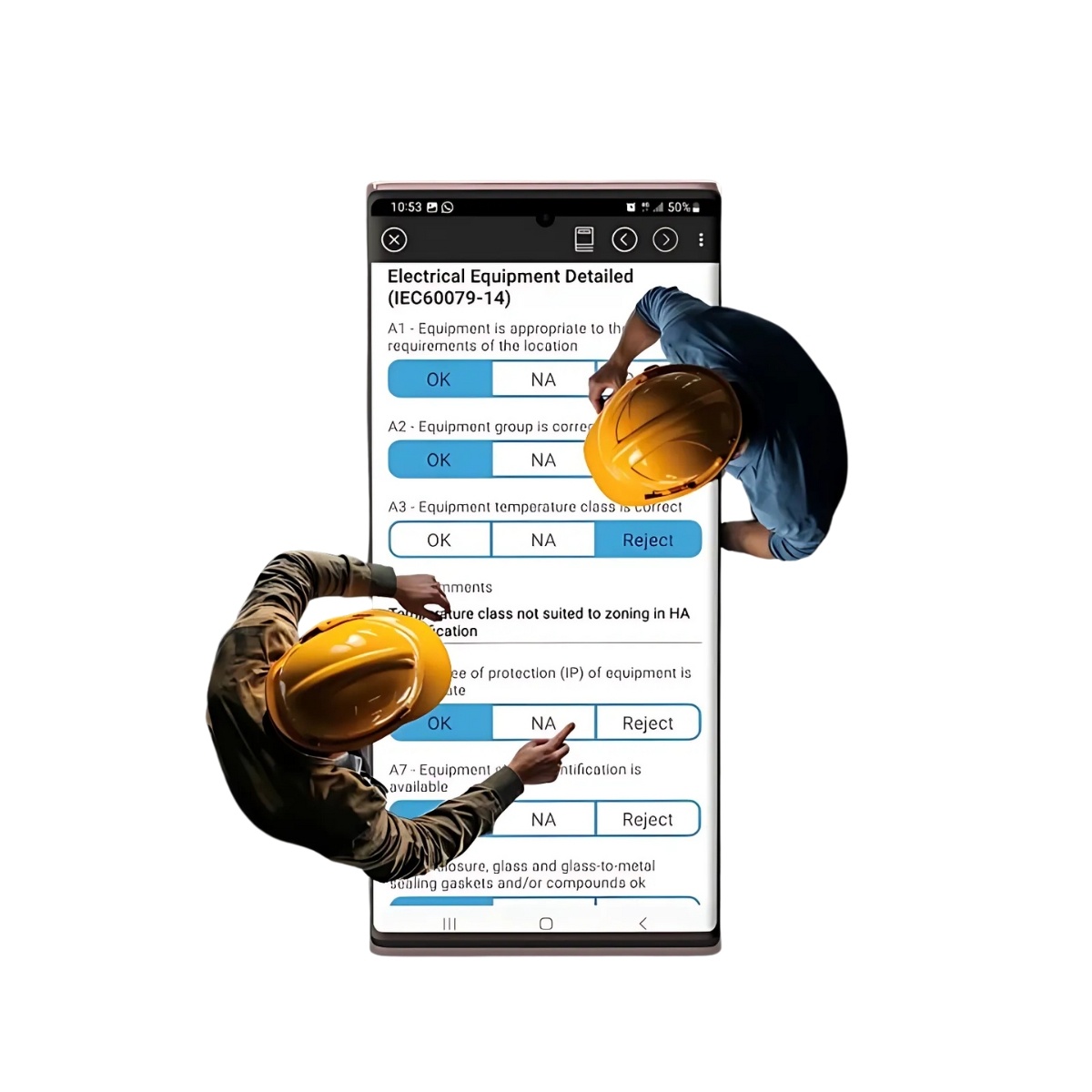
Most procurement teams don't walk into a project already knowing the exact cable part numbers they need. That's normal, and it's the specific problem EUTEX's EUNITE program was built to solve. Rather than starting from a part number, EUNITE starts with your actual engineering spec: our team reads it alongside you, works out which area classifications and compliance standards apply, and identifies the cable, glands, and enclosures that actually satisfy the job, IEC or NEC, onshore or marine, before anything gets ordered. If you're not sure exactly what to ask for yet, that's the point where EUNITE is most useful, not a barrier to using it.
Meet Us at the Americas LNG Summit & Exhibition, Lake Charles
EUTEX will have a booth at the 22nd Americas LNG Summit & Exhibition, taking place October 13 to 15, 2026, at the Lake Charles Event Center in Lake Charles, Louisiana. If you're sourcing cable for a Gulf Coast LNG project, whether it's still in the specification phase or already out for bid, our team will be on-site to help work through area classification questions, IEC-to-NEC translation issues, and supply chain planning in person.

Frequently Asked Questions
Does cable itself need ATEX or IECEx certification for hazardous area use? Generally, no. ATEX and IECEx certification applies to equipment that could act as an ignition source, such as cable glands and enclosures. Cable has to meet separate performance standards (flame propagation, gas migration resistance, mechanical protection), but requesting Ex certification directly on a length of cable is a common, avoidable sourcing delay.
What's the difference between IEC hazardous area zones and NEC classifications? IEC uses a Zone system (Zone 0, 1, 2 for gas hazards), while the U.S. National Electrical Code uses Class I, Division 1 or 2. The two systems don't translate one-to-one, and LNG projects with international engineering and U.S. inspection requirements need this translated correctly before cable is specified.
What cable standard applies to cryogenic areas on an LNG site? There isn't a single universal standard. Cryogenic and low-temperature performance needs to be confirmed against the specific jacket and insulation materials for the project, since a cable rated for standard hazardous area service isn't automatically rated for boil-off exposure or cryogenic proximity.
How long are cable lead times running in 2026? Lead times are currently more volatile than pricing, driven by mill capacity constraints and new import documentation requirements rather than raw material cost alone. Confirming a committed lead time in writing, not just a quoted price, is worth doing on every order tied to a critical path.
What is the EUTEX EUNITE program? EUNITE is EUTEX's specification support program. It starts with your engineering spec, not a part number, and helps identify the correct cable, compliance standards, and supporting components (glands, enclosures) for hazardous area and LNG projects, including sites where IEC and NEC requirements overlap.
Not sure where your project's spec stands?


-1.png)